

The first thing you should probably know about me is that Kesha Speaks started because… I was tired.
And not just physically tired. I’d been with my husband for 16 years, and I was emotionally exhausted and confused about how I’d gotten to this particular place in my marriage. I was carrying most of the labor in our home, and I knew there were dynamics between us that I hadn’t signed up for. I just didn’t have the language yet to explain where they’d come from or why I’d gone along with them for so long.
At the time, I hadn’t even fully come to terms with the word patriarchy. Honestly, that word scared me a little bit. It sounded harsh and extreme and angry, and I didn’t think of myself as any of those things. I wasn’t walking around tryna dismantle an entire system. I was trying to understand why I was so damn tired in my own house.
Why was I responsible for noticing everything that needed to happen, figuring out how it would happen, making sure it actually happened, and then dealing with whatever fell apart when it didn’t?
And how had I gotten so used to doing all of that that I thought it was just part of being a good wife?
That’s what started me down the rabbit hole. I started learning more about gender roles, religious conditioning, emotional labor, misogyny, and yes… patriarchy. And the more I learned, the more I could see how those things had shaped my marriage. But if I’m being honest, I could also see how they’d shaped me.
They’d influenced what I tolerated, what I explained away, and how quickly I assumed that anything going wrong was mine to fix. I thought I needed to communicate better, be more patient, try harder, or find some magical new way to say the thing I’d already said 47 times.
So yes, I was trying to understand my marriage. But I was also trying to figure out how I’d turned into this particular version of myself inside of it.
Now, ya girl is naturally an oversharer. I always joke and say that I wasn’t issued a privacy chip at birth. It simply didn’t come with my package. So while I was sorting through all of this, I started talking about it on TikTok.
There was no content strategy. No big master plan. No little spreadsheet with five pillars and a carefully mapped customer journey. I had about 200 followers… mostly friends, old coworkers, and people who’d probably followed me years earlier and forgotten I was there.
So I just started talking.
I talked about what I was noticing in my marriage. I talked about the emotional labor I’d been carrying. I talked about how a man could be a good person but not the greatest partner. I talked about what happens when a woman becomes so useful inside a relationship that nobody notices she’s disappearing.
And because I’m not only an overfunctioner, but an overthinker as well, I kept pulling at these ideas until I found the larger patterns underneath it.
By my fourth video, I was getting six-figure views. And the comments kept saying the same things:
“Me too.”
“You just gave me the words.”
“I’ve been trying to explain this for years.”
“I thought I was the only one.”
That’s when I realized I wasn’t just talking about my marriage. I was talking about experiences women had been living privately without always having the language for them.
The details changed. The pattern didn’t.
Different homes. Different relationships. Different generations. Different decisions about whether to stay, leave, rebuild, or simply just start asking harder questions. But underneath those differences were women who were exhausted from managing everyone else. Women who’d been taught that love meant endurance. Women who’d gotten so good at keeping everything together that nobody (including them) had stopped to ask what it was costing them.
In less than a year, that conversation grew from 200 people on TikTok to more than 300,000 people across platforms.
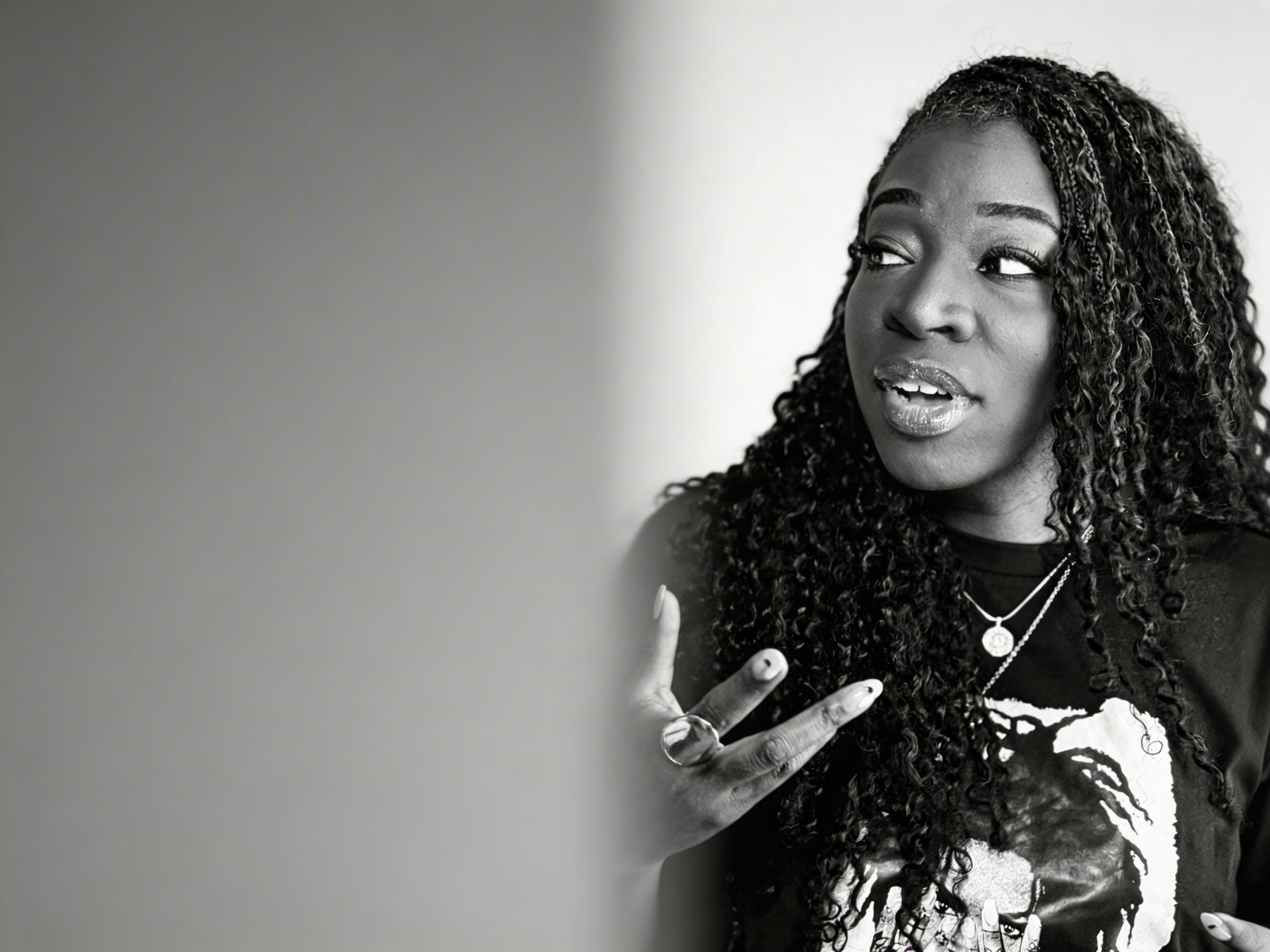
And I’m still a little stunned by that… But the number isn’t the part that stays with me.
It’s the woman who tells me she finally found a way to explain what she’s been feeling. It’s the woman who says she played one of my videos for her therapist because she couldn’t get the words out herself. It’s the woman who thought she was failing at marriage and is starting to understand that she was carrying a relationship by herself that required two people.
It’s the woman who doesn’t necessarily need me to tell her what to do. She just needs enough clarity to hear what she already knows.
That’s the heart of Kesha Speaks.
I’m not a therapist, and I’m damn sure not here to hand women another set of instructions for how they should live. I’m not gonna tell you to leave your husband, save your marriage, forgive by Friday, or buy a leather journal and manifest harder. (Journaling is amazing though. No shade.)
I’m interested in helping women name what they’re experiencing, recognize the patterns underneath it, and trust themselves enough to decide what makes sense for their own lives.
Sometimes that happens through a short video. Sometimes it needs a long-ass essay. Sometimes I need 30 uninterrupted minutes and my teleprompter. And sometimes the most important part happens after I’m finished talking, when another woman says, “Okay, but here’s what this looked like in my life.”
For a while, I’ve called my weekly newsletter The SpeakEasy because that’s what I wanted it to feel like: a place where we could slow down, tell the truth, and say some of the things women have been expected to carry quietly.
Now I’m giving that idea more room here on Kesha Speaks.
I want space to follow a thought all the way through without racing a clock or chopping it into pieces for an algorithm. Space for longer writing, deeper videos, useful tools, and conversations that don’t have to end when the post does.
The SpeakEasy newsletter will still be free every week. Each month, paid subscribers will get a deeper exploration of one theme. Sometimes that’ll be an essay. Sometimes it’ll be a video series, a resource, or something else I felt excited to make.
(Because I know myself well enough to know that if I promise the exact same thing in the exact same format every month, I’ll eventually get bored and start avoiding my own platform 😏)
What won’t change is the purpose.
We’re gonna keep putting language to the things women have felt, noticed, questioned, and carried but haven’t always known how to explain. Because once you can name what’s happening, it gets a lot harder to keep explaining it away.
And sometimes the first thing clarity gives you isn’t an answer. Sometimes it just gives you the relief of knowing you’re not the only one.
If this sounds like the kind of conversation you’ve been looking for, subscribe and come sit with us. The SpeakEasy arrives every week, with deeper monthly explorations for paid subscribers.