

From The SpeakEasy archives · Originally published July 17, 2026
I posted a video about how I used to call my husband my best friend and how much he hated it.
He didn’t gently disagree. He didn’t say, “I just think of you as more than that.” No. He was very clear. We were lovers. We were husband and wife. We were not friends.
Apparently, he wasn’t alone, because the comments turned into a whole convention for people deeply offended by the idea of being friends with their spouse.
One man said, with his whole chest, that his wife was not his friend.
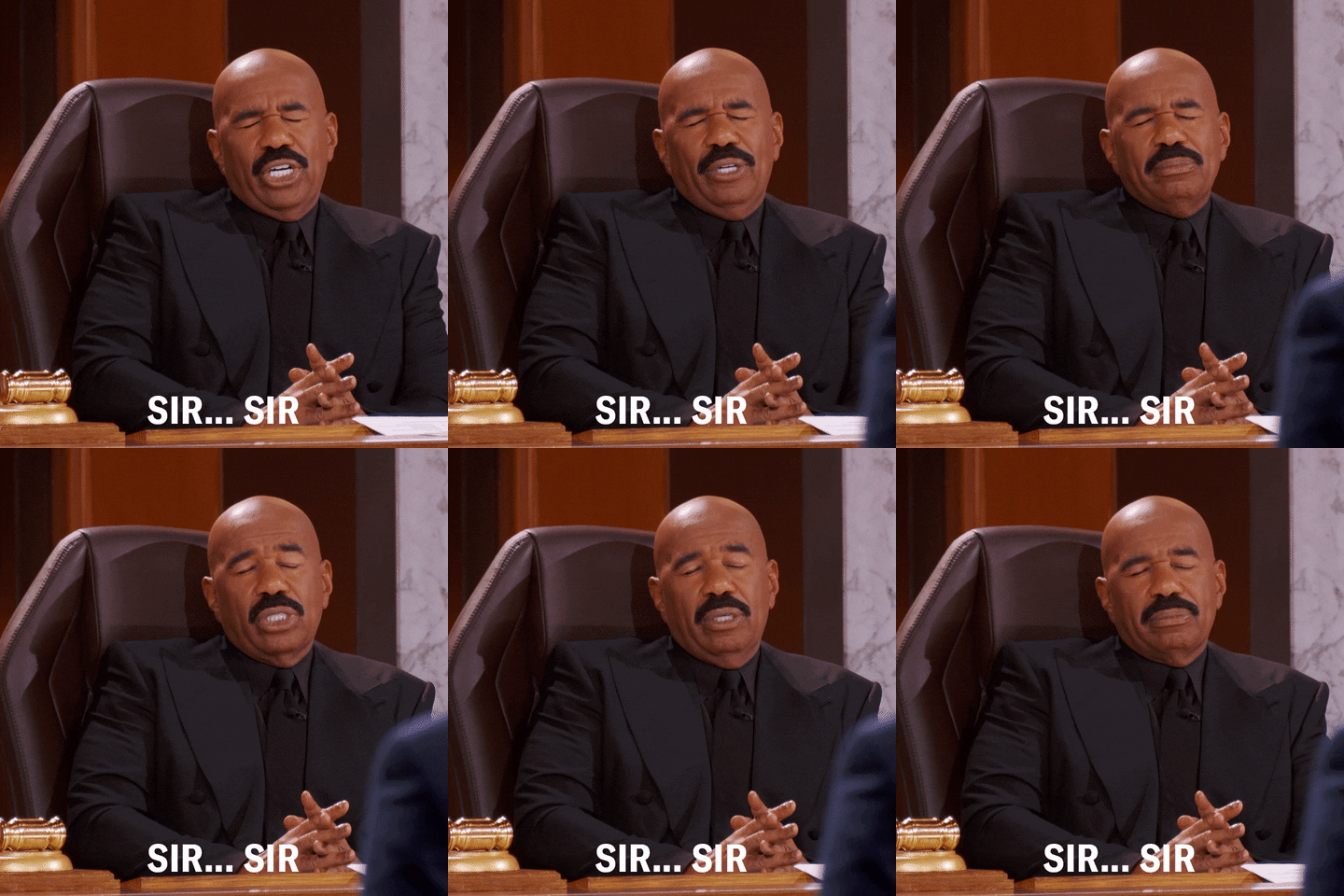
I don’t know what kind of marriage y’all have over there, but that statement should not be delivered with that much pride.
A lot of people got stuck on the wording. They wanted to debate whether your spouse has to be your best friend, whether romance and friendship are completely separate things, and whether calling a man your friend somehow puts him in danger of being friend-zoned seventeen years and two children into the relationship.
Nobody is friend-zoning the husbands. Please be serious.
But after reading the comments and sitting with the video a little longer, I realized I’d been focused on the wrong part too.
The hardest truth might not be that my husband hated being called my best friend. It might be that he was right.
I don’t think we were friends.
I think I confused closeness with friendship.
We knew each other for a long time. We had two children. We shared a home, bills, routines, holidays, family members, problems, inside jokes, and enough history to fill several seasons of a bad television show.
We could laugh. And I mean really laugh. We could turn on music, pour drinks, throw some food on the grill, and have a great time. We were good at that. Our barbecues were not the problem.
For years, I looked at all of that and thought, “Of course this is my best friend.”
Who else knew that much about my life? Who else had been there for that many versions of me? Who else had seen me tired, sick, pregnant, irritated, hopeful, embarrassed, broke, successful, overwhelmed, and dancing in the kitchen?
It felt like friendship because there was familiarity. But familiarity only tells you somebody has had access to your life. It doesn’t tell you what they did with that access.
That’s the part I understand differently now.
A friend doesn’t do some of the things he did to me.
This is where the whole conversation becomes less cute.
Friends can disappoint you. They can be selfish, dishonest, avoidant, or flat-out wrong. Friendship doesn’t create some magical force field around bad behavior.
But when someone is genuinely your friend, your pain matters to them.
Not only the consequences of your pain. Not whether you’re still speaking to them. Not whether the relationship is in danger. The fact that they hurt you matters.
That was missing too often in my marriage.
There was emotional infidelity. There was lying. There was gaslighting and rewriting conversations until I was standing there confused and trying my best to defend what I knew I’d just experienced.
Accountability was always slippery. Somehow, every conversation about what he’d done eventually made its way back to how I said something, what I’d failed to provide, how rejected he felt, or why his behavior made sense under the circumstances.
That isn’t how a friend handles your hurt.
A friend might explain themselves, but they don’t make you carry their explanation like it cancels out the damage. They don’t look at your pain and immediately start building a case for why you were difficult to love properly. They don’t need you to be equally guilty before they can admit they were wrong.
And they damn sure don’t make you question your grip on reality just so they can avoid sitting in discomfort for five minutes.
When I strip away the husband title and look at the behavior the way I would in any other relationship, it gets very clear.
I would never call someone my best friend if they treated me that way.
I probably wouldn’t call them a friend at all.
I was the one bringing the friendship.
I think this is where I fooled myself. I behaved like a friend to him.
I listened. I gave him the benefit of the doubt. I tried to understand where his behavior came from, what he was afraid of, what he didn’t have language for, and what might have shaped him.
I protected him in rooms he wasn’t in. I didn’t tell every ugly detail. I didn’t use the things he shared with me as weapons. Even when I was furious, there were lines I didn’t cross because I knew him well enough to know where they would land. I cared about his inner life.
That was friendship. And because I was offering it, I assumed we both were.
That’s such an easy mistake to make, right? When you’re doing most of the listening, understanding, forgiving, and emotional translating, the relationship can feel deep because sh*t... you’re deep inside it!
You know him. You’ve studied his moods, his wounds, his silences, and his patterns. You can explain him to himself and probably to several members of his family.
Meanwhile, he might know your coffee order and still have very little idea what your life feels like.
That gap can hide for years.
You think you’re emotionally close because you have access to a little piece of his inner world. You don’t notice that the same curiosity isn’t coming back toward you. You think you’re best friends because you tell him everything, but you don’t stop to ask how carefully he handles what you tell him.
I think a lot of women confuse what they contribute to the relationship with what the relationship is actually giving back.
We bring patience, loyalty, curiosity, protection, emotional care, and the willingness to keep trying. Then we look around, see those qualities present, and assume they belong to the relationship.
Sometimes they belong to us. And that distinction matters.
We were good at having a good time.
I don’t want to rewrite the whole relationship and pretend we never enjoyed each other. We did, and that’s part of what makes this sad. We shared a sense of humor, liked a lot of the same music, and could turn on some music, pour drinks, and make a whole room have fun. We had chemistry, companionship, a family, and sixteen years of real memories.
But having fun with somebody is not proof that they’re your friend. Some of the most enjoyable people in the world are absolutely terrible people to trust. A person can make you laugh and still mishandle your vulnerability. They can be charming at the cookout and nowhere to be found emotionally when the music stops.

That doesn’t make the laughter fake. It just means the laughter wasn’t enough evidence. I made it mean we had something underneath the marriage that maybe wasn’t actually there.
We could share a great night. What we struggled to share was responsibility. Not only chores or parenting, although Lord knows that was part of it. I mean responsibility for honesty, repair, and the relationship itself. He struggled to look directly at what his choices were doing to me without first needing me to package the pain in a way that protected him from feeling too bad about it.
That’s where the friendship kept disappearing.
I can acknowledge that the good moments were real without exaggerating what they meant. We had history. We had love in whatever form it was able to exist. We had a life that looked close. But familiarity isn’t safety, companionship isn’t always friendship, and knowing the facts of somebody’s life isn’t the same as caring about what that life feels like inside them.
Seeing that clearly doesn’t erase sixteen years. It explains why I could share so much with someone and still feel so lonely beside him.
Maybe he knew better than I did 😏
This thought has been bothering me.
What if he rejected the title because, on some level, he knew it didn’t fit?
I kept assuming he misunderstood what I meant. I thought he heard “friend” as something less intimate or less romantic, while I was using it to describe a deeper bond.
But maybe he wasn’t confused.
Maybe I was.
Maybe he understood that being a husband, in his mind, didn’t automatically require him to show up as my friend. He could love me, be attracted to me, build a family with me, feel attached to me, and still not see friendship as part of what he owed the relationship.
That would explain a lot.
Friendship creates obligations that romance can sometimes dodge. It asks you to be honest even when dishonesty would protect your image. It asks you to care about the other person’s experience, not only whether they’re still fulfilling their role. It asks you to apologize without turning the apology into a negotiation and to protect the person’s dignity when you have enough access to destroy it.
Marriage, at least the version a lot of us were handed, can become very role-based. A husband provides certain things. A wife provides certain things. Everybody performs the job description, and people call that love even when the actual people inside the roles are starving.
Friendship interrupts that. Friendship says, “I care what this life feels like for you.”
I don’t think he consistently cared about that.
Not enough.
I don’t say that because I think he spent sixteen years consciously plotting against me. I don’t. I believe he loved me in the ways he understood love. I believe parts of our life mattered to him. I believe he felt connected to our family and probably believed he was doing what a husband does.
But love without accountability can become very convenient. Love without curiosity can start looking a whole lot like possession. Love without friendship can leave one person with full access to your life and very little responsibility for what that access costs you.
Take the romance out of it for a minute...
This is the part that might be useful beyond my own story.
If you’re trying to figure out whether there is actual friendship inside your relationship, mentally remove the titles for a second.
Take away husband, wife, boyfriend, girlfriend, partner, provider, mother, father, lover.
If this person were simply your friend, would you trust them?
Would you feel safe telling them the truth?
Would you believe they cared when they hurt you?
Could you disagree without the relationship becoming emotionally unsafe?
Would you choose this friendship if there were no marriage, children, house, sex, family history, or shared last name holding it together?
That last question might be uncomfortable.
It may also clear up a lot.
Because sometimes the roles are doing more work than the relationship. You stay connected because there’s a life built around you, but when you look directly at the way you’re treated, you realize you would never voluntarily choose this dynamic as a friendship.
I’m not saying marriage and friendship have identical expectations. They don’t. A spouse will have responsibilities and access a friend does not. But the basic standards should not get lower just because the relationship became romantic.
The person with the most access to you should not be allowed to treat you with less care than the people who have far less.
And sometimes that’s exactly what happens.
Are you experiencing friendship, or supplying it?
That might be the clearest question in this whole conversation.
Are you both creating emotional safety, or are you the person making it safe enough for two people?
Does your partner know you because they’re curious about you, or because you’ve spent years explaining yourself?
When conflict happens, is there shared responsibility for repair, or do you initiate every conversation, find the words, manage the tone, make room for their feelings, and eventually accept whatever version of accountability they can tolerate?
Are you receiving the same loyalty, consideration, and protection you keep offering?
You don’t need perfect symmetry. Relationships have seasons. Sometimes one person has more capacity. Sometimes one person needs more care. But over time, friendship should feel mutual.
You shouldn’t be the only one remembering that there’s a whole a*s person underneath the role.
The friendship test changes the story.
When I stop asking whether he was a good husband and ask whether he was a good friend, I notice different things.
Would I tolerate a close friend lying to me for a year and carrying on emotionally with somebody else? Would I keep calling someone my friend if they regularly made me question my memory? Would I trust a friend who could watch me struggle, hear me explain what was hurting me, and still decide the effort required was more than they felt like giving?
No. I wouldn’t.
The husband title made me grade some things on a curve I would never have used anywhere else.
Marriage was complicated. He had childhood wounds. Men have been conditioned to communicate differently. He felt rejected. He was avoidant. He didn’t have the tools. I was not perfect either.
All of those things might be true. But I don’t need a full psychological profile to know I would not choose a friendship where I was repeatedly treated that way.
That realization is humbling because I spent years calling him my best friend while accepting behavior that didn’t meet the basic standard of friendship.
The title wasn’t describing what we had. It was describing what I wanted to believe we had.
Before you go...
Think about the friendships in your life that actually feel good.
Not perfect. Not conflict-free. Just solid.
Pay attention to how those people handle your truth, what happens when they hurt you, and whether they care about your experience without making you argue it into existence.
Then look at your romantic relationship through that same lens.
Not because your spouse has to replace your girlfriends, your sister, or the person you’ve been calling “bestie” since ninth grade. They shouldn’t. One person cannot be your entire emotional support department. That’s too much pressure and terrible staffing.
But the person with the greatest access to your life should at least know how to be a friend to you.
They should tell the truth. They should protect your dignity. They should be able to see your pain without immediately searching for a defense. They should like you beyond what you do for them. And when they hurt you, it should matter because you matter. Not only because you might leave.
I spent years thinking my husband was my best friend because we had history, children, laughter, and a life that looked close.
Now I think I was confusing how much of myself I’d invested with how mutual the friendship actually was.
That hurts, but it also helps me understand why him rejecting the word cut so deeply. Maybe some part of me already knew I was naming something I wanted more than something I had.
If I ever choose partnership again, I won’t assume friendship is included just because the relationship comes with romance, commitment, and a shared address.
I’m going to look for the evidence.
Not only whether we laugh, but whether I’m safe in his hands.
🖤 Kesha

This so resonated with me and there were some hard questions I had to ask. Thank you for sharing.